

Special Preface to Volume 50
SPECIAL PREFACE TO VOLUME 50
In 1977, Volume 25 of Organic Reactions made a celebrated appearance. Those individuals responsible for the development of this important series at that time, most notably the past Editor-in-Chief W. G. Dauben, marked this special occasion by replacing the traditional dark blue-colored binding with a silver one for that issue. The prestige of this publication has kept pace with the rapid growth of organic chemistry during the past two decades such that Volume 50 is making its appearance after an elapsed time of only twenty additional years. Drawing on the precedent established previously, the present Editorial Board members and I have opted to commemorate this noteworthy milestone by binding the present volume in gold.
I encourage all of our readers to take the time to read the ensuing historical piece entitled “A Golden Anniversary,” which Bob Joyce generously prepared. Traced therein is the chronology of the events that have had an impact on the publication of the Organic Reactions series to the present time.
There is no doubt that the outstanding continued success realized by Organic Reactions is due to several central factors: (a) its special format, established with the initial volume, which includes the incorporation of extensive easily scanned tables; (b) the countless hours of volunteer service provided by the members of the Editorial Board to guarantee that high standards are maintained; and (c) the generous contributions of our many authors who unselfishly expend a great deal of effort to make their specialist knowledge available to the international chemical community.
All of the many responsible individuals are thanked for their valued input of time and energy. In this group, one person can be identified who has done far more than any other. The time to recognize Bob Joyce publicly for his heroics in safeguarding the “character” of this publication is long overdue. Bob spends almost every day in front of his computer carefully editing all chapters and seeing to it that the tables are as compact and readable as possible. Often he completely revamps the tables in order to conserve space. The privilege that has accompanied having Bob Joyce on our team has been unparalleled. He has taught all of us what true dedication, persistence, and commitment to a goal really mean.
I had no intimation whatsoever as the lead author in Volume 25 that I would ever become affiliated with Organic Reactions and ultimately serve as Editor-inChief. In my personal view, all should aspire to this position, as it provides an incomparable way to repay in small part to the field of organic chemistry the scientific excitement that one has culled from it. With sound planning already in
place, I am certain that Volume 75 will materialize in the not-too-distant future and that its contents will be accepted worldwide with the same stamp of excellence as the golden anniversary edition.
Leo A. Paquette
Editor-in-Chief
October 1996
Department of Chemistry
The Ohio State University
Columbus, Ohio
A GOLDEN ANNIVERSARY
In 1977, Organic Reactions published Volume 25, celebrating its Silver Anniversary 36 years after the publication of Volume 1. Now, 20 years later, we reach our Golden Anniversary with Volume 50. That this series has continued to enjoy popularity in the chemical community for its 56 years is a tribute to the authors who have contributed their time and expertise to the writing of its chapters, and to the editors who have shepherded chapters to publication. The close relationships of Organic Reactions with Organic Syntheses and with John Wiley & Sons, which began with the inception of Organic Reactions, have continued unabated.
The origins of Organic Reactions were described by Harold Blatt in his Recollections in Volume 25. The goals of Organic Reactions, as set forth in the Series preface (pp. v—vi of this volume) continue unchanged. The passage of time has, not surprisingly, seen changes in personnel. William G. Dauben, who became Editor-in-Chief and President in 1969 with the publication of Volume 17, resigned that position in 1984 with publication of Volume 32. He was succeeded by Andrew S. Kende, who served in the position until 1988 with publication of Volume 37. Professor Kende was succeeded by the current Editor-in-Chief and President, Leo A. Paquette.
Changes in the Board of Directors since Volume 25 are shown in the table.
| 1976 | 1980 | 1982 | 1983 | 1987 | 1988 | 1994 | 1995 | 1996 | |
|---|---|---|---|---|---|---|---|---|---|
| Blatt | |||||||||
| Dauben | Dauben | Dauben | Dauben | Dauben | Dauben | Dauben | Dauben | Dauben | Dauben |
| House | |||||||||
| McKusick | McKusick | McKusick | McKusick | McKusick | McKusick | ||||
| Weinstein | Weinstein | Weinstein | |||||||
| Kende | Kende | Kende | Kende | Kende | Kende | Kende | Kende | Kende | |
| Hirschmann | Hirschmann | Hirschmann | |||||||
| Joyce | Joyce | Joyce | Joyce | Joyce | |||||
| Paquette | Paquette | Paquette | Paquette | Paquette | Paquette | ||||
| Overman | Overman | Overman | Overman | ||||||
| Bittman | Bittman | ||||||||
| Roush | Roush | ||||||||
| Smith | Smith |
There follows a list of the people who have been responsible for the time-con- suming, yet essential, job of editing the chapters for Volumes 1-50. Those marked with an asterisk are currently editing; those marked ‘ have died.
Roger Adams†
Homer Adkins†
Werner Bachmann†
John Baldwin
Peter Beak*
Bob Bittman*
Harold Blatt†
Virgil Boekelheide
George Boswell
Ted Cairns†
Bert Ciganek*
Art Cope†
Don Cram
Dennis Curran*
Dave Curtin
Tony Czarnik*
Sam Danishefsky
Bill Dauben
Scott Denmark*
Louis Fieser†
John Fried
Heinz Gschwend
Steve Hanessian
Dick Heck
Lou Hegedus*
Ralph Hirschmann
Herb House
Jack Johnson†
Bob Joyce*
Bob Kelly*
Andy Kende
Willy Leimgruber‡
Steve Ley
Jim Marshall
Frank McGrew†
Blaine McKusick
Jerry Meinwald
Carl Niemann†
Larry Overman*
Leo Paquette*
Gary Posner
Jeff Press*
Hans Reich
Bill Roush*
Charlie Sih
Amos Smith*
Harold Snyder†
Barry Trost
Milan Uskokovic
Boris Weinstein†
Jim White*
* currently editing † deceased ‡ deceased
Bob Bittman, who became secretary to the Editorial Board in 1968, continues in that position today. Bob was also elected to the Board of Directors in 1995.
The demands on the position of secretary to the Editorial Board increased with increasing length of chapters and frequency of volumes, and in 1983 Kende asked Jeff Press to share the duties with Bittman. Press was instrumental in working with Wiley to change classical production procedures by using computer graphics. By late 1985, structures were prepared with ChemDraw on a Macintosh Plus computer, proofread, and printed on a LaserWriter for manual “cutting and pasting” much as was done for structures prepared by graphics artists. Since then and as computer power and program sophistication have increased, this process has evolved to computer preparation of text equations and tables are printed directly from computer disk to page proof.
Bob and Jeff now serve as responsible secretaries for alternate volumes.
Bob Joyce joined Organic Reactions through a chance meeting with Bill — Dauben in 1979 on a golf course in Tucson, Arizona. Bob had retired from Du Pont in 1978. During the golf game he mentioned to Bill that he would be interested in editorial work with Organic Reactions. A few months later Bob received a phone call from Andrew Kende, who asked if Bob would be interested in finishing a chapter that the authors were unable to complete. Bob agreed, and the chapter on The Friedländer Synthesis of Quinolines was later published in Volume 28. When Harold Blatt retired as secretary to the Editorial Board in 1980, Bob was asked to assume Harold’s duties of editing chapter manuscripts for English and conformance to Organic Reactions style and format. When Boris
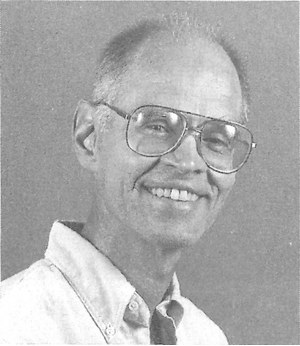
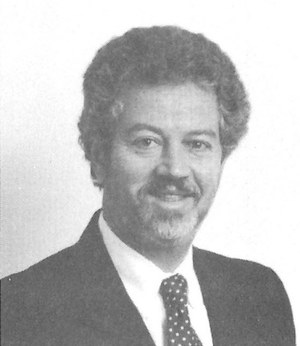
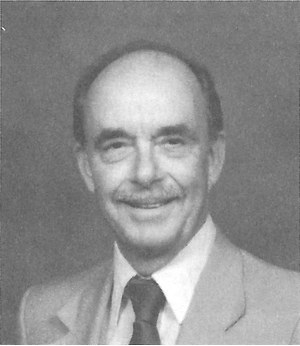
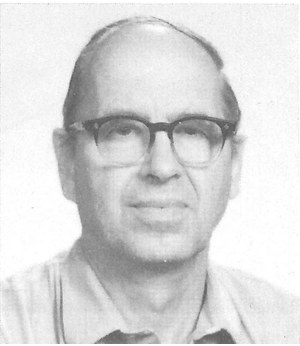
EDITORIAL BOARD MEMBERS FOR VOLUMES 26–50
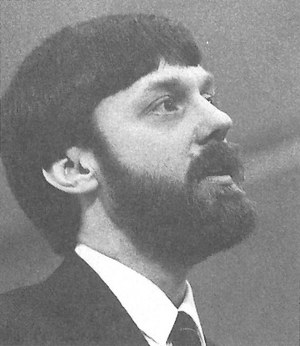
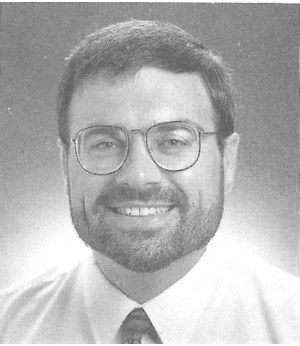
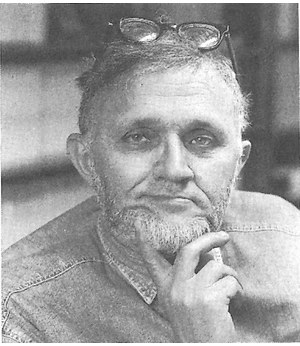
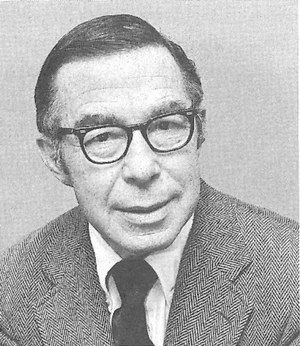
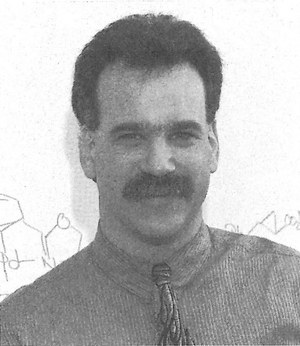
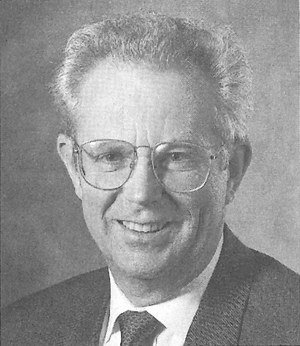
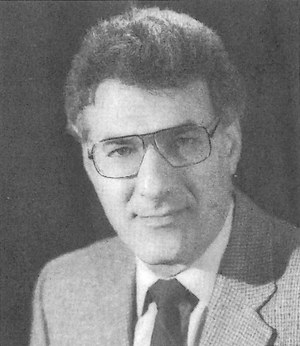
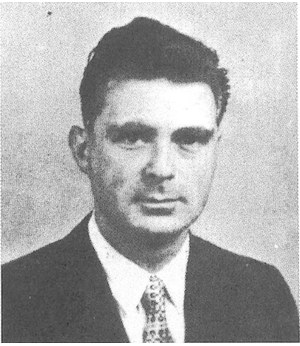
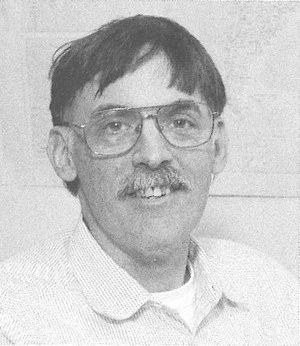
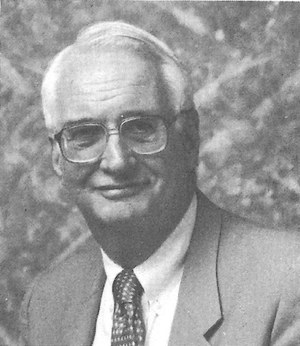
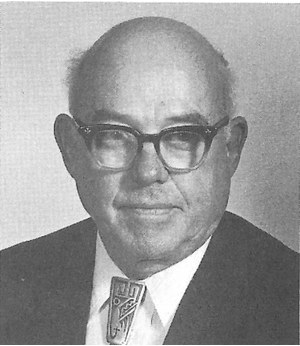
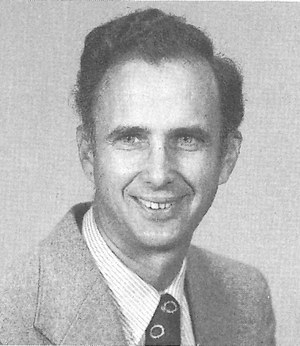
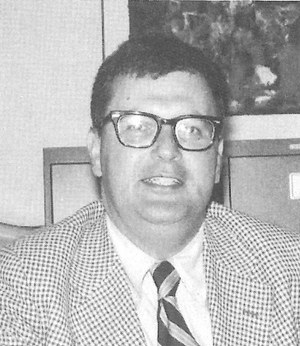
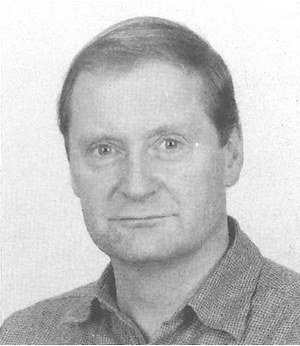
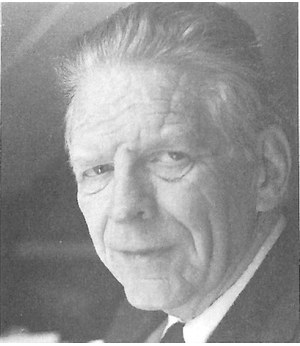
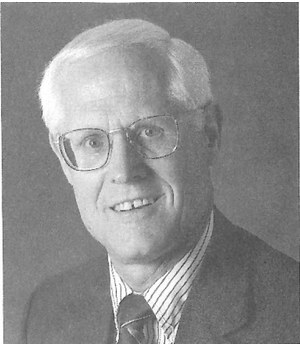
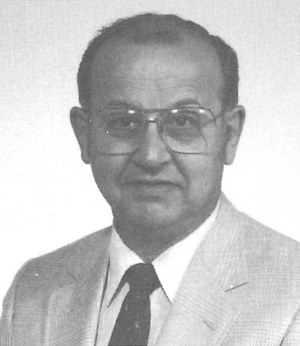
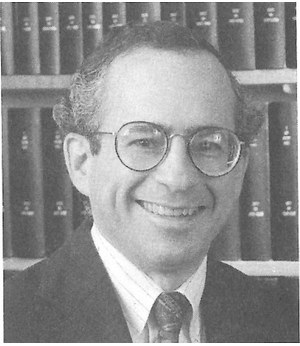
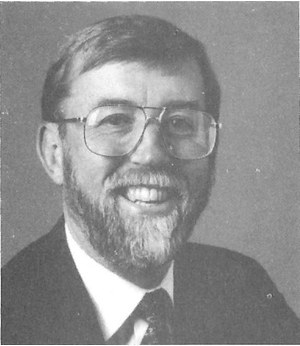
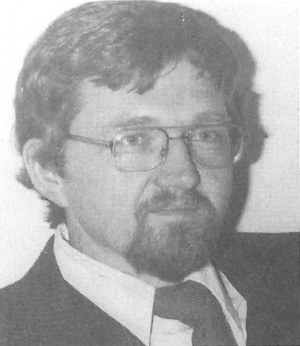
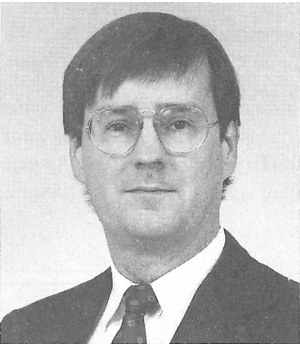
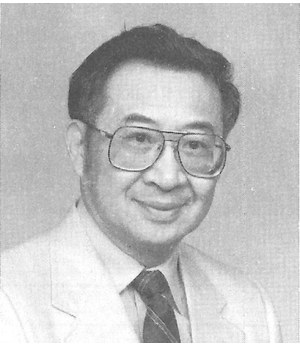
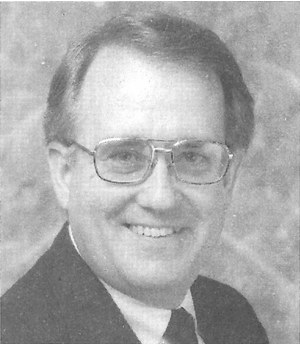
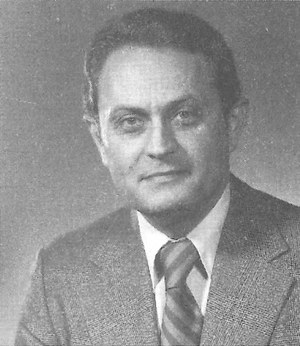
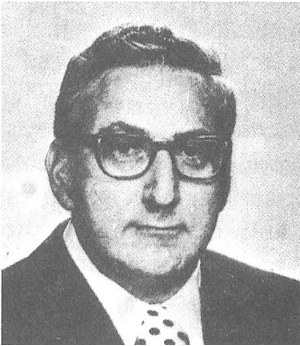
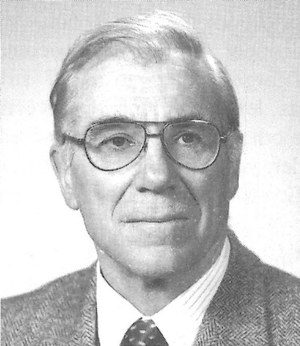
Weinstein was incapacitated with a stroke in 1982, Bill Dauben asked Bob to take on Boris’ duties as Secretary-Treasurer of the corporation, and Bob became a Director in 1983. Today, Bob continues as Editorial Coorddinator for Organic Reactions while Press has assumed the duties of secretary-treasurer.
THE PRODUCT
Whence our chapters and authors?
| Vols. | Chapters | Authors | |||||
|---|---|---|---|---|---|---|---|
| Chapters | USA | Foreign | Authors | Academic | Industrial | Other | |
| 1–25 | 135 | 121 | 14 | 201 | 130 | 64 | 7 |
| 26–50 | 59 | 41 | 17 | 105 | 82 | 19 | 4 |
Whereas the first chapter from Japan appeared in Volume 25, the increasing
prominence of Japanese organic chemists is reflected in the second 25 volumes.
Distribution of non-U.S. authors:
| Vols. | Canada | Australia | Engl. | Mexico | India | Germany | Neth. | Jamaica | Israel | Japan |
|---|---|---|---|---|---|---|---|---|---|---|
| 1–25 | 3 | 2 | 2 | 1 | 1 | 1 | 1 | 1 | 1 | 1 |
| Vols. | Japan | France | Engl. | Czech. | Italy | Germany | Neth. | Switz. |
|---|---|---|---|---|---|---|---|---|
| 26–50 | 6 | 3 | 2 | 2 | 1 | 1 | 1 | 1 |
As organic chemistry has grown and diversified, so have the contents of our chapters. Reactions that involve many kinds of organometallic reactants or catalysts have been featured in many of the second 25 volumes. Organolithium and organocopper reagents have become essential in modern organic synthesis. The uSé Of organic derivatives of silicon, phosphorus, boron, and selenium as reagents, leaving groups, or protective groups now flavors many of our chapters. On the other hand, we have devoted attention to recent developments in some of the older, yet essential reactions that are standbys in organic syntheses: the aldol and Michael reactions, the Diels-Alder Reaction, and the Beckmann Rearrangement.
The Chapter and Topic Index at the back of each volume has been a fixture of Organic Reactions since its inception. Each volume through Volume 32 also had an index to items covered in the volume. Two changes occurred with the publication of Volume 33 in 1985. The index to the volume itself was dropped, and a cumulative index to chapters and authors of all previous volumes was added in the
front of the book. In Volume 42 (1992) that cumulative index had stretched to 11 printed pages, and Professor Charles Rees of Imperial College, London, demurred at having to leaf through so many pages to find the contents of the current volume. Accordingly, in Volume 43 (1993) the cumulative index of chapters and authors was moved to the back of the book.
The size of our chapters has grown significantly in the last 20 years, a reflection
of the tremendous growth in the volume and complexity of organic chemistry.
| Vols. | Chapters | Avg./Vol. | Shortest (Pages) | Longest (Pages) | Avg. Pgs./Chapt. |
|---|---|---|---|---|---|
| 1–25 | 135 | 5.4 | 14 | 438 | 85 |
| 26–49 | 58 | 2.4 | 36 | 556 | 229 |
A second factor that has affected chapter size is changes in the format of our tables. In early volumes, starting materials and products were largely depicted by linear formulas or names. In recent years we have essentially abandoned these in favor of structural formulas or line representations of linear formulas. Although these structures require more vertical space, we believe that chemists can read them more quickly and accurately. The result of these changes is shown in the following chart.
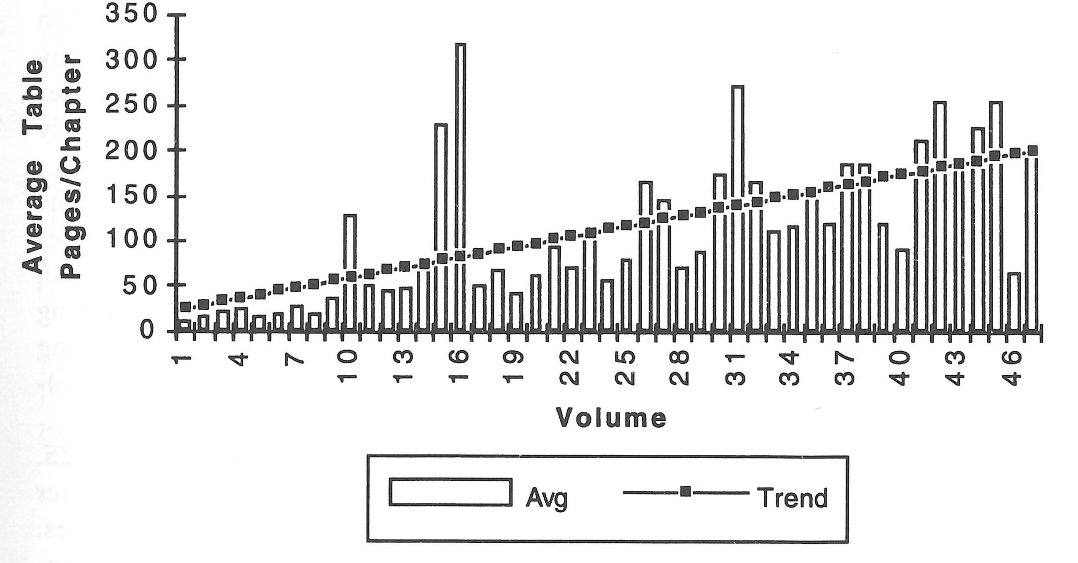
Our attempt to cope with the slope of this trendline appears in this Volume (50). All structures in the tables have been reduced to essentially the size that J. Org. Chem. requests of their authors, and then size-reduced for printing. This format saved us 30% of what would have been the original table space, and we plan to use it in the future. For now, we have not changed the size of struc-
tures in text equations because of the consequent difference between the type size in structure substituents and the surrounding text.
The format for citing references changed with publication of Vol. 27 (1982). Prior to 1982, references to text were cited at the bottom of the pages on which they first occurred, as is done in many journals, and remaining references first cited in the tables were collected in a group at the end of the chapter. Beginning with Vol. 27, all references have been collected in a group at the end of the chapter. Because many references cited in the text are also cited in the tables— frequently more than once—the present format makes it easier for a reader to jump from a citation number to the actual reference.
PUBLICATION
The rate of publication has increased. The first 25 volumes were published over a span of 36 years, while the second 25 appeared over only 20 years. The difference reflects the increasing number of chemical areas that are candidates for chapters, as well as the continuing high level of acceptance of offers to write chapters.
The mechanics of preparing a chapter have also changed with advancing technology. Thus the text portion of the manuscript for Volume 26 was prepared on a typewriter, as were the text parts of the text equations and the tables. Structures were drawn with drafting templates, and substituents were added with a typewriter. This manuscript was marked for format by a cosecretary and then turned over to Wiley, who sent it to an outside copy editor to be marked with instructions for the compositor. The entire manuscript, including structures, was then typeset by a compositor to produce a galley proof. The galley was proofread by the author(s), the chapter editor, and both cosecretaries. The corrected chapter was then set as page proof, again proofread by the same people, and finally printed in final form.
Now it is possible to supply computer disks of text and text equations to the compositor, who can downsize the equations and insert them into the text. Likewise, computer-drawn table pages can also be downsized. The compositor can now export both text and table pages directly into page proof, thus eliminating the galley proof entirely. Naturally, this process saves much time in proofreading and in the overall publication process, as well as producing a better looking volume.
The editorial process remains much as Harold Blatt described it in Volume 25. The Editorial Board has increased from 9 (Vol. 25) to 12 (Vol. 49). Chapter manuscripts are now reviewed by only selected editors rather than by all editors. We no longer have galley proofs, and page proofs are checked by only the authors, the editor responsible for the chapter, the editorial coordinator, and the cosecretary responsible for the volume.
Organic Reactions continues to assist authors with literature searches and to reimburse their out-of-pocket expenses for preparing the manuscript.
AID TO EDUCATION
We have continued our offer to sell any volumes of Organic Reactions to undergraduates, graduate students, post-doctorals, and research fellows in chemistry, medicinal chemistry, and biochemistry at half list price, making up the difference from our purchase price as a subsidy to help young chemists develop their personal libraries. Since December 1956, when the offer began, about 27,500 volumes have been sold through this offer.
Since 1958, Organic Reactions and Organic Syntheses have jointly sponsored the Roger Adams Award, which comprises a gold medal and an honorarium, and which is given biennially to an outstanding organic chemist. The Award is administered by the American Chemical Society, who also selects the awardee. The Award is presented by the Chairman of the ACS Division of Organic Chemistry at a banquet held at the biennial National Organic Symposium. Organic Reactions covers 25% of the costs of the Award and the banquet.
In 1986 the Directors authorized an Organic Reactions Lectureship, which involves inviting an outstanding younger organic chemist from overseas to visit the United States for 3—4 weeks to lecture on his research. The Lecturer is selected by our Editorial Board, and is urged to lecture at as many of the Editors’ institutions as possible. He is given a flat fee that will more than cover his expenses.
Lecturers to date have been the following.
| 1988–89 | Professor Hisashi Yamamoto | Nagoya University |
| 1990–91 | Professor Manfred Reetz | Universität Marburg |
| 1992–93 | Professor Ian Paterson | Cambridge, England |
| 1994–95 | Professor Philip Kocienski | Southampton, England |
| 1996–97 | Professor Paul Knochel | Philipps-Universität Marburg |
1988-89 Professor Hisashi Yamamoto Nagoya University
1990-91 Professor Manfred Reetz Universitat Marburg
1992-93 Professor Ian Paterson Cambridge, England 1994-95 Professor Philip Kocienski Southampton, England 1996-97 Professor Paul Knochel Philipps-Universitat Marburg
In 1994, Organic Reactions agreed to sponsor, jointly with John Wiley & Sons, an ACS Division of Organic Chemistry Graduate Fellowship. Our initial commitment was to sponsor this Fellowship jointly with Wiley for 3 years. In 1997, Organic Reactions has begun sponsoring this Fellowship on its own. The
The first three recipients of our Fellowship have been:
| 1994–95 | Alexandra E. Gould | MIT | Prof. Rick L. Dannheiser |
| 1995–96 | Marcey L. Waters | University of Chicago | Prof. William D. Wulff |
| 1996–97 | Bryan King | University of North Carolina—Chapel Hill | Prof. Michael T. Crimmins |
FINALE
Organic Syntheses and Organic Reactions are the brainchildren of a great chemist and great teacher—Roger Adams. Both series have continued to thrive since their inceptions in 1921 and 1942, respectively. They are unique in the sense that both are published by nonprofit corporations operated entirely by or-
ganic chemists to disseminate “how to” information to the world-wide organic chemical community. Both publications depend for their contents on voluntary, noncompensated inputs of organic chemists who spend untold hours searching the literature and writing—simply as a contribution to their profession. The editorial needs of both organizations are also performed by noncompensated volunteers. And both organizations participate in the annual offer to sell their publications to students at 50% of list price.
I have been involved with Organic Reactions for 15 years. Every time I examine a fresh manuscript draft, I ask myself, “Would Roger approve of this one?” I had the great good fortune to be one of Roger’s students at Illinois, thanks to “Uncle Cliff” Hamilton at the University of Nebraska. I believe that I am only one of the many organic chemists who knew Roger Adams and who can understand why organic chemists—even today—are willing to make their voluntary contributions to his legacies.
Finally, I wish to acknowledge the help and suggestions from many members of our current Editorial and Advisory Boards toward the assembling of this essay.
Bob Joyce
October 1996
View the original scanned PDF of Special Preface to Volume 50 and A Golden Anniversary